
Proudly Servicing South Denver Metro


Rated 4.9 on Google
How Often Should You Flush a Tankless Water Heater in Colorado?
Serving Greenwood Village, Parker, Centennial and Beyond!
Tankless water heaters are a popular choice for Colorado homeowners who want energy efficiency, reliable hot water, and a smaller footprint. But while tankless systems don’t store gallons of hot water like traditional water heaters, they still need regular maintenance to perform at their best.
One of the most important maintenance tasks is flushing the system to remove mineral buildup. In Centennial and throughout the Denver metro area, water quality, household usage, and the type of tankless water heater you own can affect how often you need this service. So, how often should you flush a tankless water heater in Colorado? Here’s what homeowners should know.
How Often Should You Flush a Tankless Water Heater?
Most tankless water heaters should be inspected for flushing or descaling at least once a year, although the manufacturer’s recommendations and your home’s water quality should determine the actual schedule.
For homeowners in Centennial, Parker, Greenwood Village, and Littleton, an annual maintenance visit is a good starting point.
Here are some general guidelines:
- Every 12 months: A common maintenance interval for many tankless water heaters, depending on manufacturer requirements.
- Every 6 months: May be appropriate for homes with particularly hard water, heavy hot water usage, or recurring scale buildup.
- According to manufacturer specifications: Some systems have different maintenance requirements based on water hardness, usage, and equipment design.
If you’re unsure when your tankless water heater was last serviced, a professional inspection can help determine whether flushing is necessary.
Does Colorado Have Hard Water?
Colorado’s water quality varies considerably by location and water provider. While some communities receive relatively soft mountain-sourced water, others experience moderate to high mineral concentrations. Water hardness is primarily caused by dissolved calcium and magnesium. When water passes through a tankless water heater, these minerals can accumulate on the heat exchanger over time.
Even homes with moderately hard water can experience mineral buildup, particularly when the system operates frequently. In Centennial, water hardness can vary by water district and supply source. Rather than assuming your water is hard or soft, homeowners can review their water provider’s quality information or have their water tested.
Why does this matter? The harder your water, the faster mineral scale may develop inside your tankless water heater.
What Happens If You Don’t Flush Your Tankless Water Heater?
Unlike traditional water heaters that store heated water in a tank, tankless systems heat water as it flows through a heat exchanger. Mineral deposits can gradually collect inside this component, restricting water flow and reducing heat transfer.
Without proper maintenance, homeowners may experience several problems.
1. Inconsistent Hot Water Temperatures
If your shower suddenly runs lukewarm or the water temperature fluctuates, mineral buildup could be affecting the system’s ability to heat water efficiently.
2. Reduced Hot Water Flow
Scale buildup can restrict water passages inside the heat exchanger. You may notice lower hot water pressure at faucets or showers, even when your cold water pressure seems normal.
3. Higher Energy Consumption
When mineral deposits interfere with heat transfer, your tankless water heater may need to work harder to deliver the same amount of hot water. This can reduce efficiency and potentially increase energy costs.
4. Error Codes or Unexpected Shutdowns
Some tankless systems display error codes when they detect overheating, restricted flow, or other performance issues. Mineral buildup is one possible cause, although these symptoms can also indicate unrelated mechanical problems.
5. Premature Equipment Wear
A tankless water heater is a significant investment. Allowing scale to accumulate can add stress to internal components and potentially shorten the system’s useful life. Regular maintenance helps protect that investment and can reduce the likelihood of expensive repairs.
What Is Tankless Water Heater Descaling?
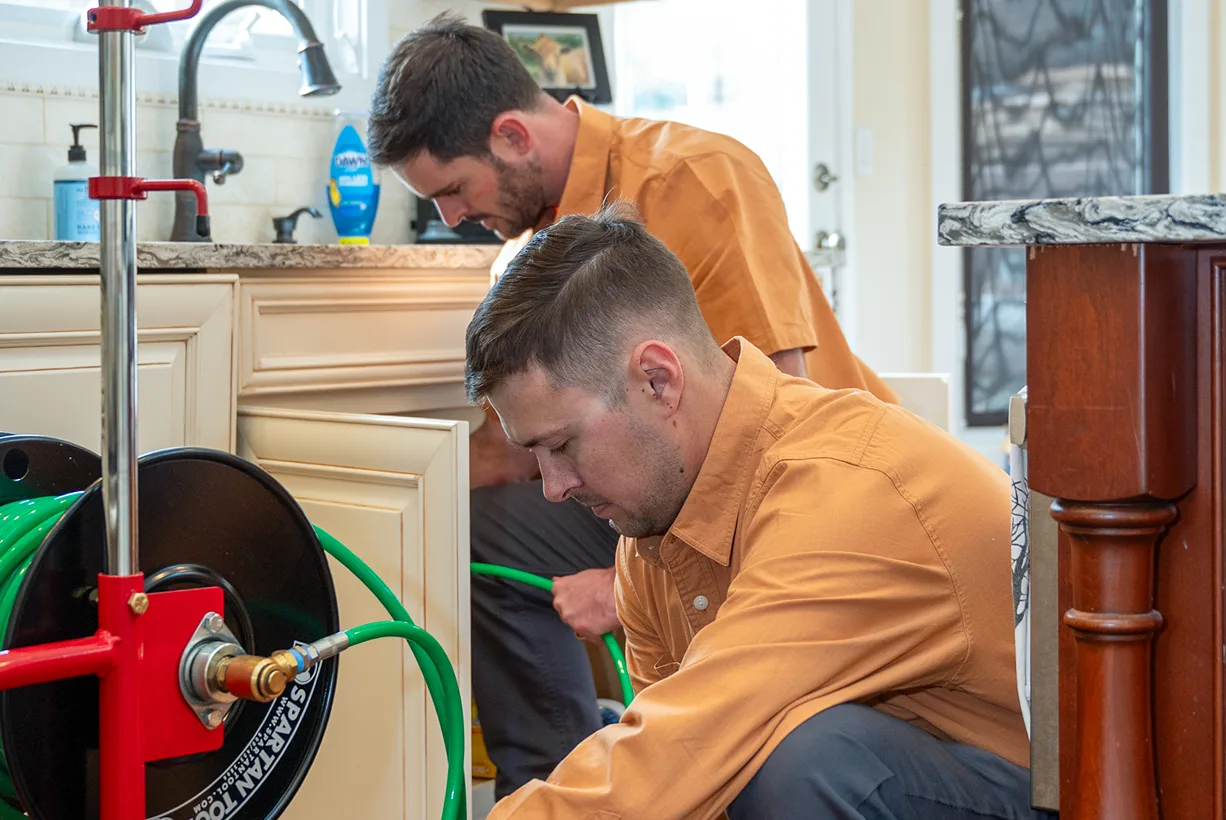
Tankless water heater descaling is the process of circulating an approved cleaning solution through the system’s heat exchanger to dissolve mineral deposits.
During a professional tankless water heater maintenance visit, a plumber may:
- Inspect the system for visible leaks, damage, and performance issues.
- Shut off the water supply and isolate the water heater per the manufacturer’s instructions.
- Connect a flushing pump and hoses to the service valves.
- Circulate a manufacturer-approved descaling solution through the heat exchanger.
- Rinse the system thoroughly with clean water.
- Inspect and clean applicable inlet filters or screens.
- Restore operation and verify that the system heats water properly.
The exact procedure depends on your water heater’s brand and model.
Important: Not every tankless system uses the same flushing procedure or cleaning solution. Using the wrong chemicals or equipment can damage internal components. Always follow the manufacturer’s maintenance instructions.
Can You Flush a Tankless Water Heater Yourself?
Some homeowners choose to flush their tankless water heaters using a descaling kit. However, the process requires the correct equipment, compatible cleaning solution, and an understanding of the system’s service valves.
Improper flushing can damage the equipment or create leaks. Professional tankless water heater service also lets technicians inspect other components, identify developing problems, and verify that the unit is operating safely and efficiently. For Centennial homeowners who haven’t maintained their system recently, scheduling a professional service visit is a practical way to get back on track.
Can a Water Softener Reduce Tankless Water Heater Maintenance?
If your home has hard water, a water softener may help reduce calcium and magnesium scale buildup. Water softeners remove hardness minerals through an ion-exchange process, which can help protect plumbing fixtures, appliances, and water-heating equipment.
However, installing a water softener doesn’t automatically eliminate the need for tankless water heater maintenance. Your system may still require periodic inspections, filter cleaning, and flushing, depending on manufacturer recommendations. A plumber can help evaluate your water quality and determine whether a water treatment system makes sense for your home.
Don’t Forget Tankless Maintenance Before Colorado Winter
November is a good time to think about water heater maintenance in Centennial. As temperatures drop across the Front Range, homeowners depend on reliable hot water for showers, laundry, dishes, and everyday household activities.
Cold incoming water temperatures can also require your tankless system to work harder to reach the desired temperature. A properly maintained tankless water heater is better prepared to handle seasonal demand.
If your water heater is installed in an unheated garage or another area exposed to freezing temperatures, ask your plumber about freeze protection. Flushing removes mineral buildup, but it does not replace proper winterization or freeze protection.
Schedule Tankless Water Heater Maintenance in Centennial, CO
Whether your tankless water heater is due for its annual flush or you’re noticing inconsistent hot water, Mountain Standard Plumbing can help. We serve homeowners throughout Centennial, Greenwood Village, Parker, Littleton, and surrounding Denver metro communities with professional plumbing services and water heater solutions.
Regular tankless water heater maintenance can help improve performance, protect your equipment, and keep hot water flowing when your household needs it. Check out our Mountain Standard Home Care Plan Membership Program for a variety of perks and maintenance, and our special offers for extra savings.
Don’t wait until mineral buildup causes a problem. Contact Mountain Standard Plumbing to schedule tankless water heater service in Centennial, CO.
Taking care of our customers is at the heart of everything we do.
Local Plumbers. Professional Service.